



If you’re looking into therapy for your child, you may have come across both individual therapy sessions and group programs.
So what’s the difference? And how do you know which one might suit your child?
The answer isn’t necessarily one or the other.
Individual and group therapy create different opportunities for children. The right fit depends on what your child is working towards, the support they need and the type of environment that helps them participate.
Let’s look at how they differ.
- What Is Individual Therapy?
- What Is Group Therapy?
- What Are the Benefits of Individual Therapy?
- What Are the Benefits of Group Therapy?
- Is Group Therapy Only for Social Skills?
- Does My Child Need to Be Able to Participate Independently in a Group?
- Can My Child Do Both Individual and Group Therapy?
- How Do I Know Which Is Right for My Child?
- What Do Therapy Groups Look Like at Happy Chatter?
- Group or Individual Therapy? Start With the Child
What Is Individual Therapy?
Individual therapy usually involves your child working directly with a therapist in a one-to-one session.
This gives the therapist an opportunity to focus closely on your child’s individual goals and adjust activities, supports and the pace of the session to suit them.
Depending on your child’s needs, an individual Occupational Therapy session might involve working on areas such as:
- fine motor skills
- gross motor skills and coordination
- self-care activities
- sensory needs
- emotional regulation
- play
- routines and transitions
- school-related activities.
What the session actually looks like will vary from child to child.
For one child, it might involve practising dressing skills. For another, it could include movement activities, handwriting, play or working through a challenging everyday routine.
If you’re new to paediatric OT, our Occupational Therapy for Children: A Parent Guide explains more about what Occupational Therapy is and what sessions can look like.
What Is Group Therapy?
Group therapy involves a small number of children participating in therapy activities together.
Rather than simply providing individual therapy with several children in the same room, a group can create opportunities to practise skills with and around other children.
Depending on the purpose of the group, activities might involve:
- taking turns during games
- completing an activity together
- moving through an obstacle course
- participating in craft or construction activities
- following a group routine
- practising school-related activities
- sharing equipment or space
- communicating ideas or asking for help.
The therapist can support children within these shared activities while adjusting the level of support for individual participants.
What Are the Benefits of Individual Therapy?
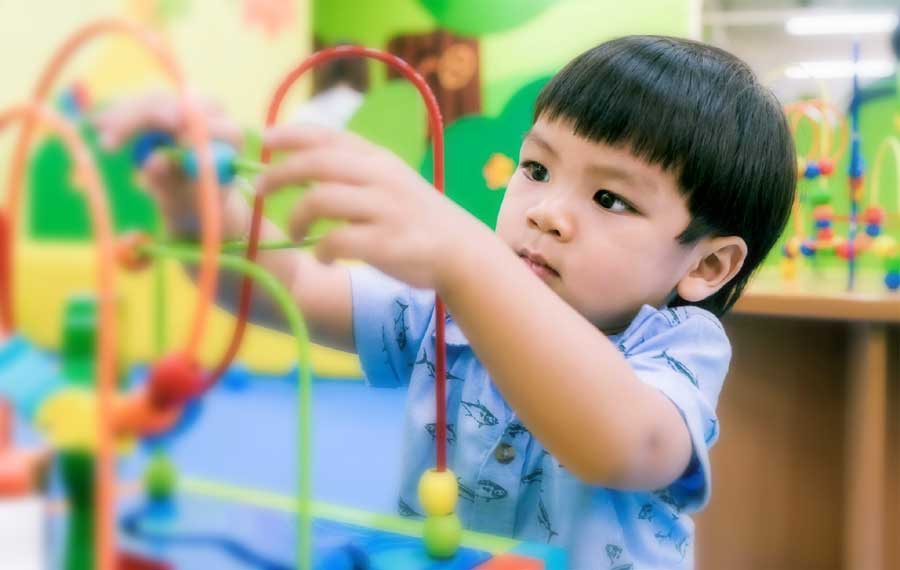
One of the main advantages of individual therapy is that the session can be closely tailored to the child.
There is more opportunity to focus on a particular skill, activity or routine and adjust the session as needed.
Individual therapy may be useful when a child:
- has specific individual goals
- needs a high level of therapist support
- benefits from a quieter or more predictable environment
- is learning a new skill before practising it in other settings
- needs activities adapted closely to their abilities
- is working on an everyday activity that doesn’t naturally involve peers.
It can also give the therapist time to understand why a particular activity is difficult and explore different supports with the child and family.
What Are the Benefits of Group Therapy?

The biggest Benefits of Group Therapy for Kids is that other children become part of the environment.
That can create opportunities that aren’t always available in a one-to-one session.
For example, children might practise:
- waiting while another child has a turn
- communicating with peers during play
- working together on a shared activity
- following a routine alongside other children
- managing changes that naturally occur during group activities
- participating in games with shared rules
- navigating shared spaces and materials.
A therapist is still there to support the activity, but the child has opportunities to practise within a more socially dynamic environment.
This can be particularly relevant when a child’s goals involve participating with other children at kinder, school, during play or in the community.
Is Group Therapy Only for Social Skills?
No.
Although interacting with other children may be part of a group, therapy groups can have many different purposes.
A group might focus on:
- school readiness
- handwriting or fine motor activities
- movement and gross motor skills
- play
- emotional regulation
- following routines
- communication
- a combination of skills within a particular activity or theme.
The important question is not simply whether a child needs to “work on social skills”.
It’s whether practising particular skills within a group environment is relevant to what the child wants or needs to do in everyday life.
Does My Child Need to Be Able to Participate Independently in a Group?
Not necessarily.
Children may need different levels of support to participate in group activities.
However, the group environment does need to be appropriate for the individual child.
When considering whether a group may be a good fit, we look at things such as the child’s age, goals, communication, support needs and the focus and environment of the particular group.
The aim isn’t for every child to participate in exactly the same way.
Can My Child Do Both Individual and Group Therapy?
Potentially.
Individual and group therapy don’t have to be viewed as competing options.
A child might work on a skill individually and later have opportunities to practise it within a group. Another child might participate in a group while continuing individual therapy for goals that need more personalised support.
For example, a child may practise the steps involved in joining a game during an individual session, then have an opportunity to use those skills with other children in a supported group environment.
Whether both are useful will depend on the individual child and their goals.
How Do I Know Which Is Right for My Child?
Start with the reason you’re considering therapy.
Ask:
- What activities is my child finding difficult?
- Where are those difficulties happening?
- What would we like them to be able to participate in?
- Does the skill naturally involve other children?
- How much individual support does my child currently need?
- What type of environment helps them participate?
A therapist can then help you consider whether those goals are better suited to individual therapy, a group environment or potentially a combination.
When speaking with a paediatric therapy clinic, you can ask how each option would support your child’s everyday activities.
If you’re still working out what areas an Occupational Therapist may be able to support, our What Do Occupational Therapists Help With? guide provides examples across everyday activities at home, kinder, school and in the community.
What Do Therapy Groups Look Like at Happy Chatter?
Happy Chatter runs a range of group programs throughout the year, including groups during the school term and school holidays.
Each group has a different focus, with activities planned around the skills children will have opportunities to practise within the group. Group sizes vary depending on the program, but generally include around 6–10 children.
Children can join a group based on their age and whether the particular group is a suitable fit for them. This helps us consider whether the group environment, activities and level of support are appropriate for each child.
Children don’t need to be an existing Happy Chatter client to participate — new clients are welcome to join our group programs.
If you’d like to see what groups are currently available, visit our Happy Chatter Groups page for information about our programs and how to enquire.
Group or Individual Therapy? Start With the Child
There isn’t one therapy format that is right for every child.
Individual therapy can provide focused, personalised support. Group therapy can create opportunities to practise skills with other children in a supported environment. At different times, a child may benefit from one, the other or both.
The decision should come back to what your child wants or needs to do, what is currently making that difficult and which environment gives them an appropriate opportunity to practise.
If you’re unsure which option may suit your child, the Happy Chatter team can talk with you about your child’s needs and whether an individual session or one of our group programs may be appropriate.